

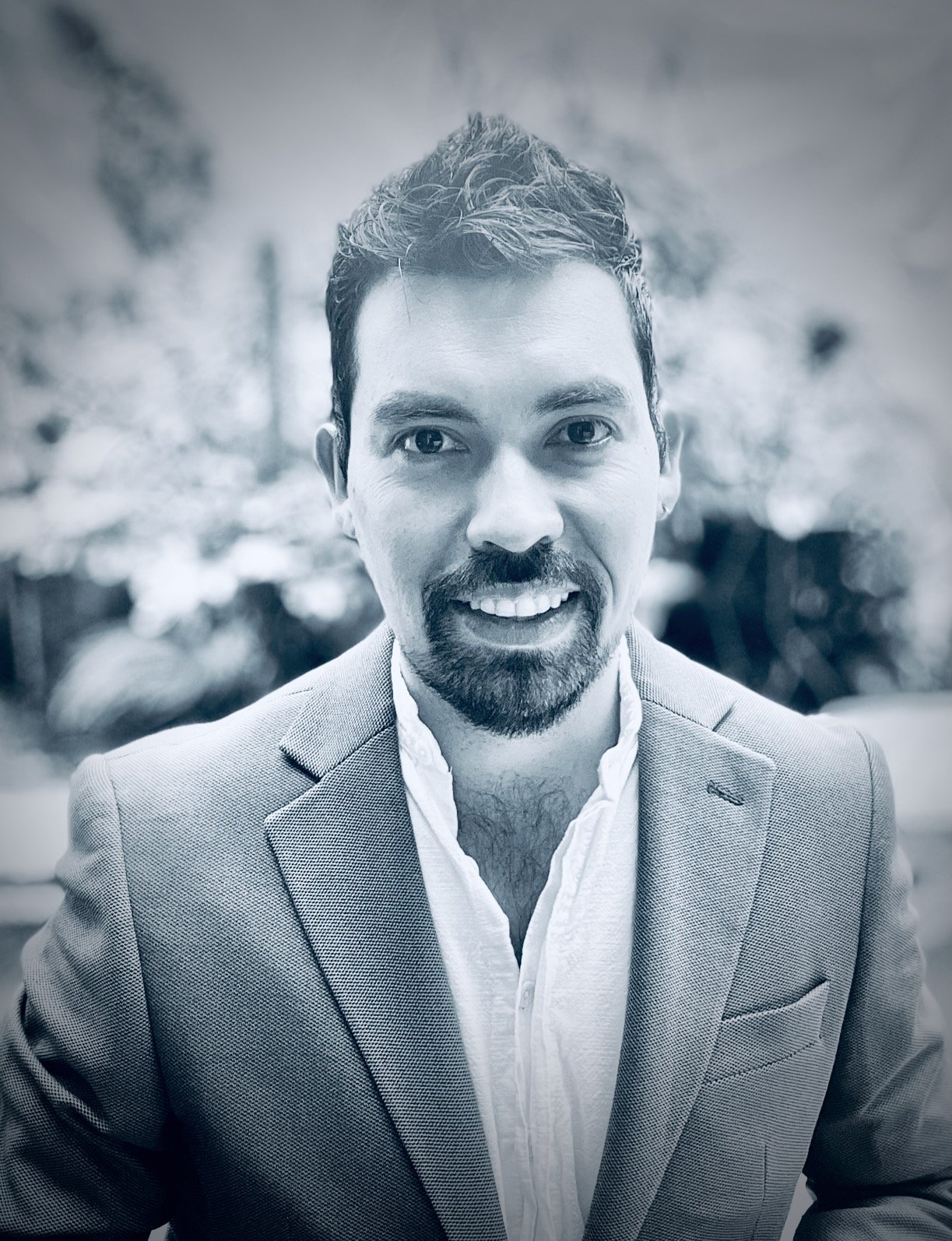
Working group lead: William San-Martin
Governance Working Group
iN-Net’s Global Nitrogen Governance Working Group is dedicated to building a broad, inclusive, and action-oriented research agenda for nitrogen governance that can help translate ideas into effective governance pathways, supporting National Action Plans and other international policy processes. The group brings together scholars, professionals, and stakeholders from a wide range of disciplines, sectors, and regions, including academia, non-profit organizations, governments, and organizations working at the intersection of science, society, and policy.
Our shared goal is to advance the understanding of how nitrogen is governed across scales and sectors, identify key gaps, and barriers, and outline concrete steps to advance more coordinated, democratic, and context-responsive approaches to nitrogen governance. Through policy-relevant frameworks, comparative case studies, and actionable recommendations, the Working Group works to strengthen connections among research, policy, and practice to address diverse regional realities and governance needs. By centering issues such as participation, knowledge, and power, the group aims to support transformative pathways toward more sustainable, equitable, and adaptive nitrogen futures.
Nitrogen Governance Working Group Members
Lead: William San Martín
Research Fellows: Kelly Perry and Chigozie Nweke-Eze
Members from iN-Net Partner Organizations
Claire Delon – Integrated Nitrogen Studies in Africa (INSA)
Mark Sutton – International Nitrogen Management System (INMS)
Tapan Kumar Adhya – South Asia Nitrogen Hub (SAHN)
Working Group Members
Tapan Kumar Adhya – School of Biotechnology, KIIT University (Deemed), India
Tolera Abera Goshu – Ethiopian Institute of Agricultural Research, Ethiopia
Samuel Weniga Anuga – University Mohammed VI Polytechnic (UM6P), Morocco
Marci Rose Baranski – UNEP / Independent
Abas Basir – UK Centre for Ecology and Hydrology, UNEP
Mathias Nigatu Bimir – Kotebe University of Education, Ethiopia
Dennis Clare – Institute for Energy and Climate Strategies, USA
Gabriel Coleman – Trinity College Dublin, Ireland
Gisleine Cunha-Zeri – National Institute for Space Research (INPE), Brazil
Khem Raj Dahal – Institute of Agriculture and Animal Science, Tribhuvan University, Nepal
Smriti Das – XLRI Delhi-NCR Campus, India
Eric Davidson – University of Maryland Center for Environmental Science, USA
Jean-Louis Drouet – INRAE – Institut national de recherche pour l’agriculture, l’alimentation et l’environnement, France
Bruno Esperante – HISTAGRA-CISPAC, University of Santiago de Compostela, Spain
Evan Fernandez – Harvard University (Weatherhead Center for International Affairs), USA
Richard (“Tad”) Ferris – Institute for Governance & Sustainable Development, USA
Morten Graversgaard – Department of Agroecology, Aarhus University, Denmark
Kentaro Hayashi – Research Institute for Humanity and Nature, Japan
Yogi Hendlin – Dynamics of Inclusive Prosperity Initiative, Erasmus University Rotterdam; The Center to End Corporate Harm, UCSF, Netherlands
Shaikh Tanveer Hossain – IFOAM – Organics Asia, Bangladesh
Aboubakar Iyabano – Wageningen University, The Netherlands
Anuradha Jayaweera – University of Peradeniya, Sri Lanka
Darzhan Kazbekova – Social Science, Maxwell School of Citizenship and Public Affairs, USA
Megha Kaviraj – Siksha ‘O’ Anusandhan Deemed to be University, Bhubaneswar, India
Diaby Kassamba Mohamed Lamine – University Nangui-Abrogoua – IREN, Côte d’Ivoire
Josh McBee – Climate Advisers, USA
Naeem Sarwar – Institute of Agronomy, Bahauddin Zakariya University Multan, Pakistan
Avipsa Mahapatra – Environmental Investigation Agency US
Niharika Tyagi – Council on Energy, Environment and Water
Ning Liu – Independent
Shubham Love – University of Pennsylvania, USA
Camille Lanzarotti Nolasco – INPE, Brazil / University of Toronto, Canada
Pradeep Nair – Central University of Himachal Pradesh, India; Group on Earth Observations; UNESCO Inclusive Policy Lab; Earth System Governance Project
Hervé Alain Napi Wouapi – University of Dschang, Cameroon
Oscar Tiku – Tohoku University, Japan
Daniel Rath – Natural Resources Defense Council, USA
Steliana Rodino – Institute of Research for Agricultural Economy and Rural Development / INOSTAR / Romanian Farmers’ Association, Romania
Monika Skowrońska – Department of Agricultural and Environmental Chemistry, University of Life Sciences in Lublin, Poland
Eleanor Vance – Tufts University, USA
Andrea Perez Valdez – Compassion in World Farming International, UK
Kim Chi Vi – University of Guelph, Canada
Hervé Alain Napi Wouapi – University of Dschang, Cameroon
Fengshi Wu – University of New South Wales, Australia
Anastasia Yang – University of Edinburgh, UK
Benjamin Nyilitya – State Department for Water & Sanitation, Ministry of Water, Sanitation and Irrigation, Kenya
Evrim Doğan Öztürk – Turkish Ministry of Environment, Urbanization and Climate Change, Turkey